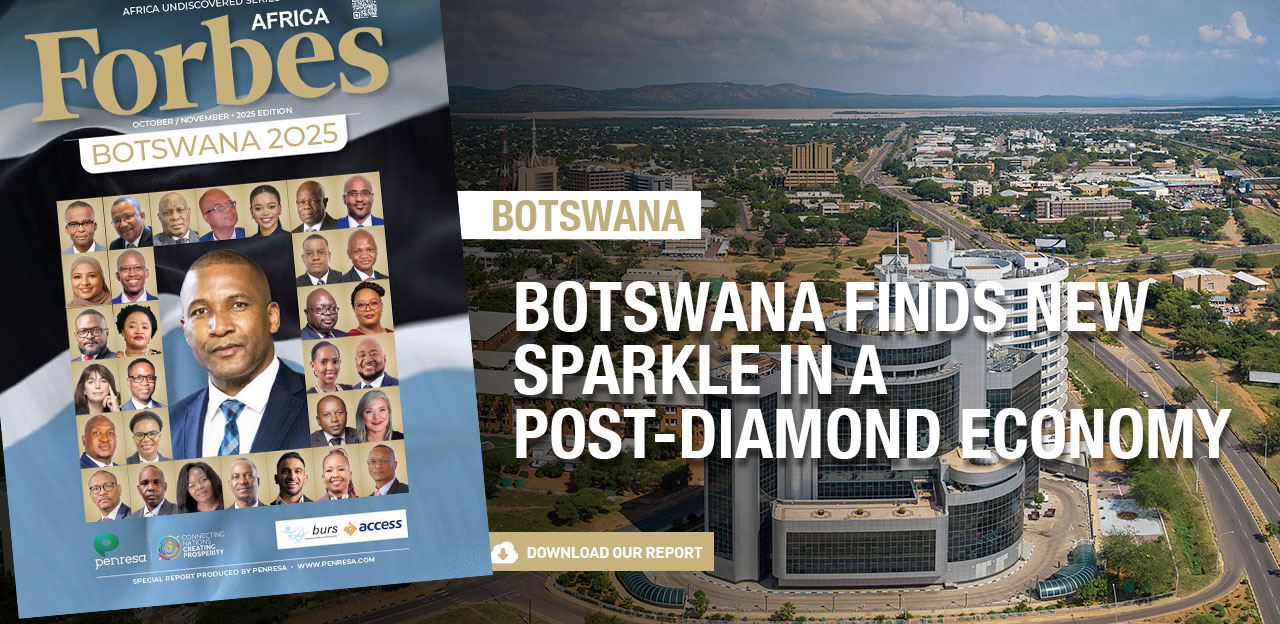
With new leadership for the first time in fifty years, Botswana is putting young voices at the center of government, aiming to tackle 27.6% unemployment in a nation where more than two-thirds of its citizens are under 35.
For the first time in more than half a century, Botswana has a new voice at the helm. The Umbrella for Democratic Change (UDC) stepped into office, ending over fifty years of uninterrupted rule by the former governing party. Their agenda is to bring younger voices into the halls of power and tackle an unemployment rate hovering at 27.6% in a nation where more than 70% of citizens are under 35.
“We are building a Botswana that is self-reliant, forward-thinking, and a leader on the African and global stage,”
says Advocate Duma Gideon Boko, the country’s new president.
But the UDC inherits a familiar challenge—Botswana’s deep reliance on diamonds. For decades, the mineral has been the country’s economic anchor.
Now, the government is intent on broadening that base, inviting investment in technology, agriculture, tourism, sports, and environmental services. Artificial intelligence and other advanced tools are on the table, with an eye toward boosting productivity and building industries that can stand shoulder-to-shoulder with the best in the world.
Mining still runs deep in Botswana’s economic story. Diamonds have been the star, but they’re far from the only gem. Take soda ash and salt, produced at some of the most competitive costs in the world.
“We have a sustainable business that can definitely run well into the future, far beyond the diamond story, and propel this country forward,”
says Othusitse Seokamo, Acting Managing Director of Botswana Ash.
Geological surveys point to soda ash deposits of about 400 million tons, enough to sustain production for more than fifty years.
Then there’s the land, which is vast, underused, and holds water reserves beneath its surface. Agriculture has the potential to shift from an underperformer to a cornerstone of Botswana’s economy. At present, local farmers supply only a fraction of the country’s staple grains.
“If we can change that unused land into arable land, we could become the breadbasket of countries in sub-Saharan Africa,”
says Werner De Beer, CEO of Bokomo Botswana.
With South Africa, Zimbabwe, Zambia, and the Democratic Republic of the Congo as neighbors, Botswana sits in the middle of potential markets. Expanding production of maize, sorghum, and wheat, paired with investment in irrigation, storage, and transport, could cut imports, create jobs, and put the country’s own food security on firmer ground.
Tourism is also evolving. Botswana has long been home to crown jewels like the Okavango Delta and Chobe National Park, but the vision now includes more—developing MICE tourism, bringing underexplored regions into the spotlight, and weaving cultural and culinary experiences into travel itineraries.
“We see unmatched potential, and we want to keep unlocking it by encouraging the private sector to take the lead,”
says Keitumetse Setlang, CEO of the Botswana Tourism Organisation.
Sport, too, is stepping into the diversification agenda. The Botswana National Sport Commission is investing in talent development, centers of excellence, and scholarships, with a goal to put more of the nation’s athletes on the global stage.
Already, international victories are lifting Botswana’s profile and attracting investor attention.
Even environmental stewardship is being recast as an economic driver. Waste that once crossed borders for processing is now handled locally and turned into market-ready products.
“We package them here now and send them to market, ready for end-users to put to immediate use,”
says Baleseng Buzwani, MD and Co-Founder of Champs Botswana.
Public awareness campaigns, partnerships with councils, and environmental education are embedding sustainability into daily life. Investments in treatment facilities and alignment with international standards are making environmental responsibility part of the country’s business case.
Botswana remains one of Africa’s most stable and wealthiest countries per capita, yet its leaders know stability must be matched with resilience. Openness to foreign investment is being paired with efforts to expand domestic production, modernize infrastructure, and grow citizen-led enterprises.
With its young population, strategic location, and capacity for innovation, Botswana is positioning itself to be recognized for a broader and more balanced economy, one where diamonds are part of the story, but no longer the whole of it.
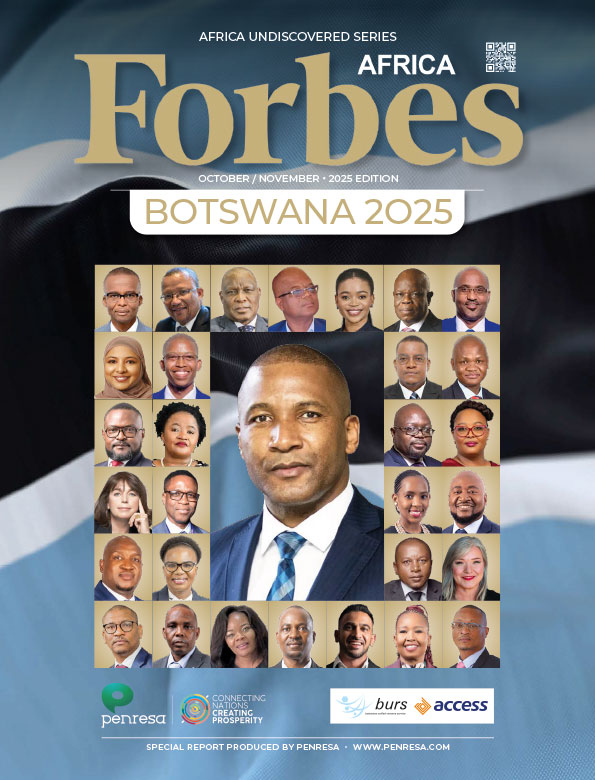
Botswana Finds New Sparkle In A Post-Diamond Economy
With new leadership for the first time in fifty years, Botswana is putting young voices at the center of government, aiming to tackle 27.6% unemployment in a nation where more than two-thirds of its citizens are under 35.